
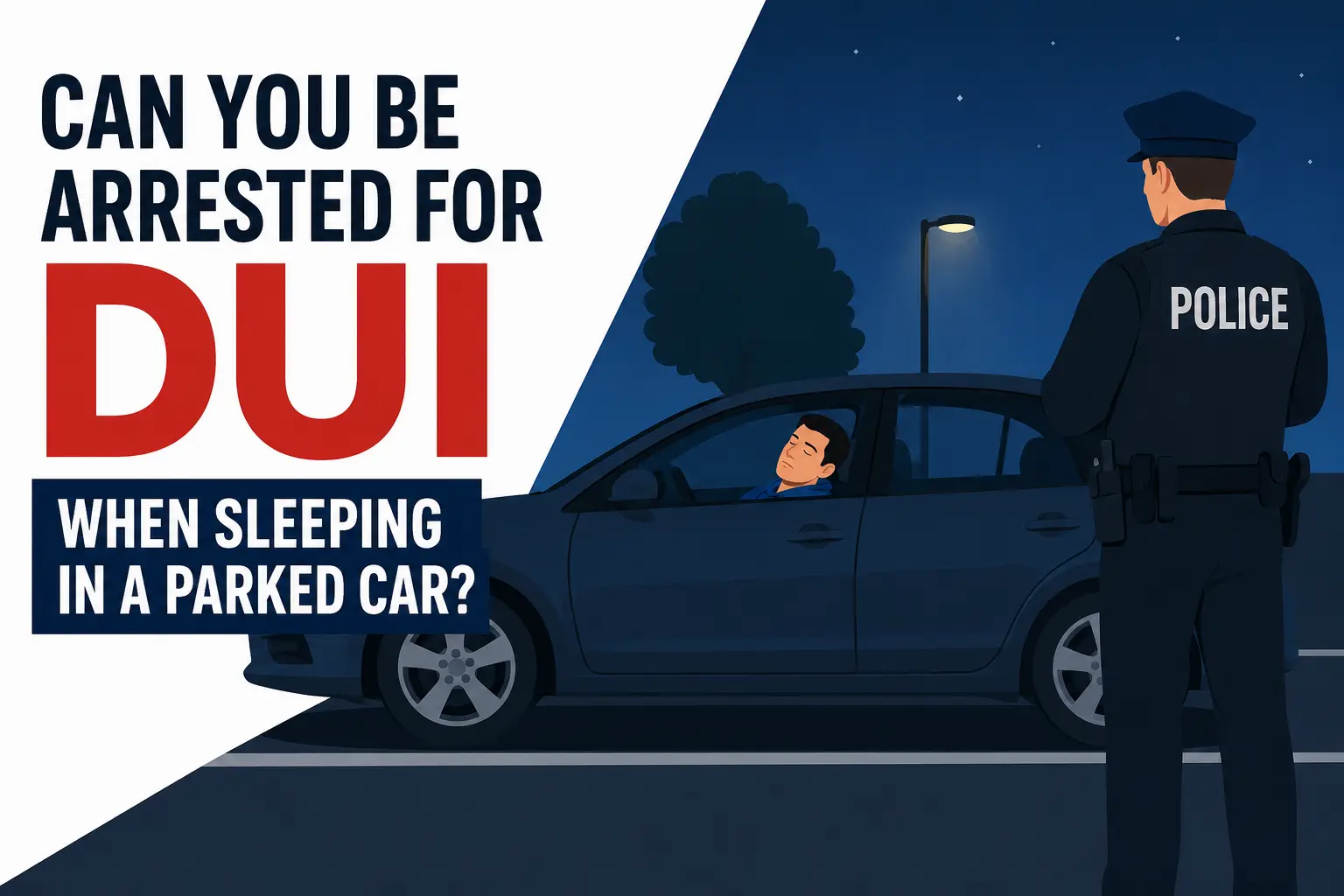
Can You Be Arrested for DUI When Sleeping in a Parked Car in Tampa?
Yes, you can.
It’s one of the most misunderstood areas of Florida DUI law, and I’ve had more than a few clients call my office after being arrested under circumstances they never thought could lead to a DUI charge.
In many of those cases, the person wasn’t driving when law enforcement arrived. The vehicle was parked. Sometimes the engine wasn’t even running. Often, the person was asleep.
Their reaction is usually the same.
“I was trying to do the right thing.”
I understand why they feel that way.
Many people believe that if they pull over and sleep instead of driving while impaired, they have eliminated the risk of a DUI arrest. Unfortunately, Florida law is not always that straightforward.
Whether a DUI charge can be sustained depends on the specific facts of the case and, more importantly, whether the State can prove the legal elements required for a conviction.
Why Someone Can Be Charged Without Actually Driving
Under Florida law, prosecutors do not necessarily have to prove that a person was actively driving when an officer made contact.
The law also applies to someone who is in what courts refer to as “actual physical control” of a vehicle while under the influence of alcohol or drugs.
That phrase carries significant weight in DUI cases involving parked vehicles.
The issue is not always whether the vehicle was moving. The issue is whether the person had the present ability to operate it.
That distinction is often where these cases are won or lost.
What Prosecutors Look For
When a DUI arrest involves a parked vehicle, prosecutors typically examine the totality of the circumstances.
There is rarely one fact that determines the outcome.
Instead, they look at the entire picture.
Questions that frequently arise include:
- Was the person sitting in the driver’s seat?
- Where were the keys located?
- Was the engine running?
- Was the vehicle legally parked?
- Did any witness observe the vehicle being driven?
- Did the person make statements admitting they had recently driven?
The answers to those questions can have a substantial impact on the strength of the State’s case.
The Importance of the Car Key Location
One detail that often becomes a focal point is the location of the keys.
If the keys are in the ignition, prosecutors may argue that the person had immediate control of the vehicle and could have driven away at any moment.
If the keys were elsewhere, the analysis may be different.
I’ve handled cases where something as simple as the location of the keys became a significant issue in evaluating whether the State could prove actual physical control beyond a reasonable doubt.
The facts matter.
And in DUI cases, small facts can matter a great deal.
Does the Engine Have to Be Running?
No.
Many people are surprised to learn that a vehicle does not have to be running for a DUI arrest to occur.
The absence of a running engine may be favorable to the defense, but it does not automatically prevent prosecutors from pursuing charges.
I often explain to clients that no single fact should be viewed in isolation. The engine being off is one piece of the puzzle. Courts and prosecutors will look at the entire situation rather than any one detail standing alone.
What If You Pulled Over to Sleep?
This is where these cases become particularly frustrating.
I’ve represented individuals who made a conscious decision not to drive because they recognized they were not in a condition to safely operate a vehicle.
Instead of getting back on the road, they parked and attempted to sleep.
Despite that decision, they were still arrested.
From a practical standpoint, their actions may have prevented something far worse from happening. From a legal standpoint, however, the analysis does not stop there.
The question becomes whether the evidence supports the conclusion that they remained in actual physical control of the vehicle while impaired.
Parking Lots and Private Property
Another misconception is that DUI laws only apply on public roads.
That is not the case.
DUI arrests occur regularly in parking lots, apartment complexes, private business properties, and other locations throughout the Tampa area.
The fact that a vehicle was parked on private property does not automatically shield someone from prosecution.
The State Still Has the Burden of Proof
One point I always emphasize is that an arrest is not a conviction.
In parked-car DUI cases, prosecutors often face challenges that are not present in a traditional traffic-stop DUI.
There may be no officer who observed driving.
There may be questions about when the vehicle was last operated.
There may be disputes regarding who was actually driving before the vehicle came to rest.
Those issues can become important.
The State must prove every element of the offense. Assumptions and speculation are not enough.
Every Parked-Car DUI Case in Florida Is Different
People often search online looking for a simple answer.
Unfortunately, these cases rarely lend themselves to simple answers.
I’ve reviewed parked-car DUI arrests that appeared strong at first glance but raised significant legal issues after a closer examination of the evidence.
I’ve also reviewed cases where prosecutors possessed substantial evidence supporting their allegations.
The outcome depends on the facts, the evidence, and how the law applies to the particular circumstances involved.
That is why relying on general information from the internet is rarely a substitute for having an attorney review the actual case.
Speak With a Tampa DUI Defense Attorney Near You
If you were arrested for DUI while sleeping in a parked vehicle in Tampa, it is important to understand that the arrest itself does not determine the outcome of your case.
The evidence should be carefully reviewed. The officer’s observations, body camera footage, witness statements, chemical testing results, and surrounding circumstances all deserve close scrutiny.
At Brian Palacios Law, I personally defend individuals facing DUI charges throughout Tampa and the surrounding communities. If you have been arrested and want a clear understanding of where you stand, contact my office to schedule a confidential consultation.