
If you’ve been arrested for a first DUI in Tampa, the RIDR program may be the most important option you’ve never heard of.
RIDR, short for Reducing Impaired Driving Recidivism, is a DUI diversion program run by the State Attorney’s Office for the 13th Judicial Circuit. For eligible first-time offenders, it can turn a DUI charge into a reckless driving plea with a withhold of adjudication. That means no DUI conviction and a record that may later be sealed.
That’s a significant outcome. Florida law does not allow a judge to withhold adjudication on a DUI, and a DUI conviction can never be sealed or expunged. RIDR is one of the few paths in Hillsborough County that avoids both of those problems.
But RIDR isn’t automatic, it isn’t free, and it isn’t the right choice for every case. As a former prosecutor, I’ve seen how these cases are evaluated from the inside. Here’s what you need to know before deciding whether to pursue RIDR or fight the charge.
Key Summary
- The RIDR program is a DUI diversion program for first-time DUI arrests in Tampa, run by the State Attorney’s Office for the 13th Judicial Circuit.
- Completing RIDR reduces a first DUI charge to reckless driving with a withhold of adjudication, so there is no DUI conviction and the record is usually eligible to be sealed.
- RIDR is generally limited to first-time DUI arrests with no crash, no injury, no minor in the vehicle, and a BAC below .20, and the State Attorney decides who is accepted.
- RIDR requires DUI School, a MADD victim impact panel, 50 to 75 hours of community service, and 3 to 6 months of alcohol or drug monitoring, depending on the sanction level.
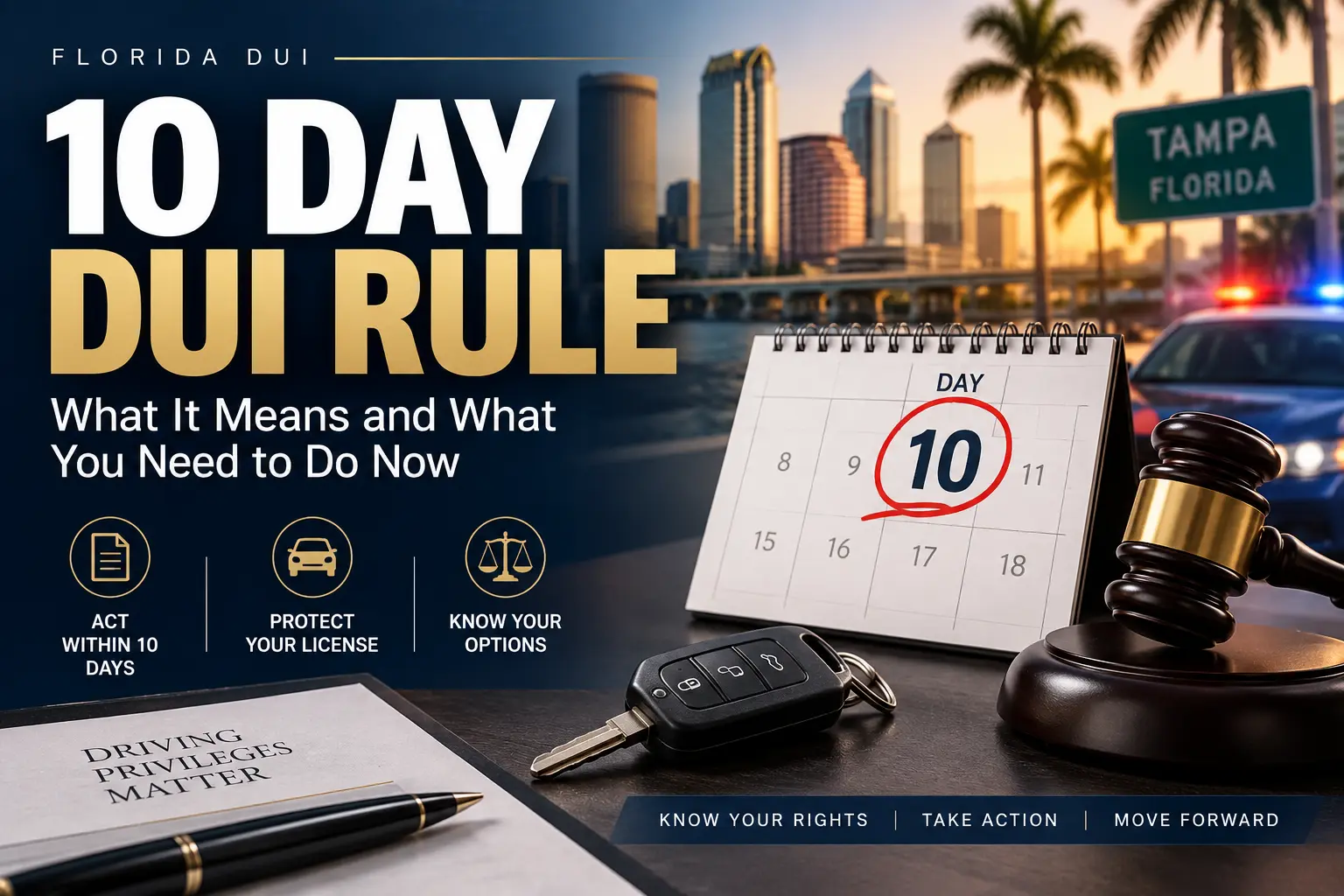
- RIDR does not stop the administrative license suspension, which must be challenged within 10 days of a DUI arrest in Florida.
What Is the RIDR Program in Tampa?
The State Attorney’s Office launched RIDR on March 1, 2018, in response to a hard fact. Hillsborough County has consistently ranked at or near the worst in Florida for DUI crashes, injuries, and fatalities.
The program was designed to reduce repeat offenses by front-loading education and monitoring for first-time offenders, rather than simply processing them through a standard DUI sentence. According to the Hillsborough State Attorney’s Office, RIDR is aimed specifically at first-time, non-aggravated DUI offenders.
In practice, RIDR works as a structured trade. You complete a set of sanctions before your case is resolved. In return, the State agrees to reduce the DUI to reckless driving and allow a withhold of adjudication.
RIDR applies only to cases prosecuted in Hillsborough County. If you were arrested in Pinellas or Pasco, different programs and policies apply.
RIDR vs. a DUI Conviction: Why It Matters
The difference between completing RIDR and being convicted of a first-offense DUI in Tampa goes well beyond the courtroom.
A DUI Conviction
A first DUI conviction carries fines of $500 to 1,000(1,000 to $2,000 if your BAC was .15 or higher), up to six months in jail, a license revocation of 180 days to one year, DUI School, and a 10-day vehicle impoundment. The conviction stays on your Florida driving record for 75 years, can never be sealed, and counts as a prior if you’re ever arrested again.
A RIDR Outcome
Completing RIDR typically results in a reckless driving plea with a withhold of adjudication. There’s no DUI conviction, no court-ordered license revocation from the plea itself, and in most cases the record becomes eligible to be sealed once everything is complete.
The sealing point is the one clients often underestimate. A sealed record is hidden from most employers and background checks, and in many situations you can lawfully deny the arrest ever happened. That option simply doesn’t exist after a DUI conviction. If a clean record matters to your career, especially if you hold a professional license, RIDR deserves a serious look.
Who Qualifies for the RIDR Program in Tampa?
Eligibility is decided by the State Attorney’s Office on a case-by-case basis. There’s no application you can file on your own, and meeting the general criteria doesn’t guarantee acceptance.
Based on the program’s guidelines and how cases are handled in practice, you generally must meet all of the following:
- This is your first DUI, with no prior DUI, alcohol-related reckless driving, or DUI diversion
- The charge is a misdemeanor, with no crash involving property damage and no DUI with injury
- No minor under 18 was in the vehicle
- Your BAC was below .20
- No recent felony conviction or felony withhold, commonly within the last five years
- You’re not on probation, in another diversion program, or facing a pending serious traffic charge
- You don’t hold a commercial driver’s license
Even when a case technically fits, the prosecutor looks at the full picture: driving behavior, officer observations, conduct during the stop, and the strength of the evidence. That’s where having someone who knows how those decisions are made becomes valuable. A well-prepared request, supported by mitigation, can make the difference in a borderline case.
The Three RIDR Sanction Levels
RIDR assigns each participant to a sanction level based on the facts of the arrest. The level determines how much community service and monitoring you’ll complete. The State Attorney’s Office sets the exact terms and can adjust them, so it’s important to confirm the current requirements for your case.
Level I
Level I generally applies when your BAC was at or below .15. It typically includes 50 hours of community service and three months of alcohol monitoring.
Level II
Level II generally applies when your BAC was above .15 or you refused a breath test. It typically includes 75 hours of community service and six months of alcohol monitoring.
Level III
Level III applies to drug-related DUIs. It typically includes 50 hours of community service and three months of drug monitoring through a sweat patch.
At every level, participants typically also complete DUI School and any recommended treatment, attend a MADD victim impact panel, serve a 10-day vehicle immobilization, and complete a period of probation, commonly 12 months, with monthly supervision fees.
If your case involves a breath test refusal, there’s another factor to consider. Since Trenton’s Law took effect on October 1, 2025, a first refusal can be charged as a separate criminal offense in Florida. How that affects your RIDR eligibility is a question to raise with your attorney early, before any decisions are made.
How the RIDR Process Works
The most distinctive feature of RIDR is timing. Most of the work happens before your plea, not after.
Protect Your License First
Your license is administratively suspended at the time of arrest, and RIDR doesn’t change that. The decision about a formal review hearing or a hardship license has to be made within 10 days, separate from the criminal case.
Review the Evidence
Before you commit to anything, your lawyer should review the police report, video, and test results. If the stop or the breath test is flawed, fighting the charge may be the better option.
Request Eligibility and Complete Pre-Plea Sanctions
Your attorney contacts the assigned prosecutor to confirm eligibility and your sanction level. You’ll waive your right to a speedy trial and complete the front-loaded requirements, typically within about 60 days. These usually include enrolling in DUI School, attending the victim impact panel, starting community service, and installing a monitoring device.
Enter the Plea and Finish Probation
Once you’ve shown proof of completion, the State amends the charge to reckless driving and the court withholds adjudication. You then finish the balance of your community service and monitoring while on probation, and you must stay arrest-free.
Seal Your Record
After the case is complete, you may be eligible to petition to seal the arrest record. Our DUI sealing and expungement page explains how that works.
What Happens If You Don’t Complete RIDR?
RIDR is a privilege, not a right, and the State can withdraw the offer.
If you miss deadlines, fail to complete sanctions, violate monitoring, or pick up a new arrest, the case can return to the regular DUI track, where you face the full range of DUI penalties. A violation during the probation period is handled like any other probation violation.
That’s why it’s important to go into RIDR with a realistic view of the time and cost involved. Monitoring devices, DUI School, supervision fees, and the vehicle immobilization all carry costs, and the community service hours require real time. For most eligible clients the trade is worth it, but it should be a considered decision.
Should You Accept RIDR or Fight the DUI?
This is the most important question, and the answer depends on the evidence in your case.
RIDR is often the right choice when the State’s evidence is strong: a clear breath result, a lawful stop, and solid video. In that situation, securing a reckless driving plea with a withhold is an excellent result.
But RIDR still means pleading to a criminal offense, completing substantial sanctions, and serving probation. If there are real problems with your case, you may be giving up a better outcome. Issues that can justify fighting instead include:
- A traffic stop without reasonable suspicion
- Poorly administered field sobriety tests
- Breath test problems, including observation period or Intoxilyzer maintenance issues
- Body camera or dash camera footage that contradicts the officer’s report
In some cases, the strongest strategy is to pursue both at once: keep the RIDR option open while challenging the evidence, and use any weaknesses to negotiate from a stronger position.
From my time as a prosecutor, I can tell you the State evaluates a RIDR request against the whole file, not just the BAC number. Clean conduct during the stop, prompt enrollment in DUI School, and well-documented mitigation all matter when a case sits close to the line.
Frequently Asked Questions About RIDR in Tampa
Can I apply for RIDR without a lawyer?
Eligibility is determined by the prosecutor assigned to your case, and the request normally comes through defense counsel. You’re not legally required to have an attorney, but a lawyer can evaluate whether RIDR is your best option and make sure the process is handled correctly.
Does RIDR get my license back?
No. The administrative suspension from the Florida Department of Highway Safety and Motor Vehicles is separate from the criminal case. You must address it within 10 days of your arrest, whether or not you pursue RIDR.
Will a RIDR case show up on a background check?
Until it’s sealed, the arrest and the reckless driving disposition can appear. Once the record is sealed, it’s generally hidden from most public background checks.
Is RIDR available for a second DUI?
No. RIDR is limited to first-time offenders, and anyone who has already completed a DUI diversion program isn’t eligible again. See our page on second offense DUI in Tampa.
Find Out If RIDR Is Right for Your Case
RIDR can be a strong option when it fits the evidence and aligns with your goals.
The decisions you make in the first days after an arrest can affect your driver’s license, criminal record, insurance premiums, and career long after the case is closed. Before you accept any offer or enroll in anything, make sure you understand all of your options.
If you’ve been arrested for DUI in Tampa or anywhere in Hillsborough County, contact Brian Palacios Law to schedule a free consultation. As a former Hillsborough prosecutor, I’ll review your case, tell you honestly whether RIDR is your best option, and help you protect your license and your record from the very beginning.